What does Sepang have to prove in October to justify RM300 million a year?

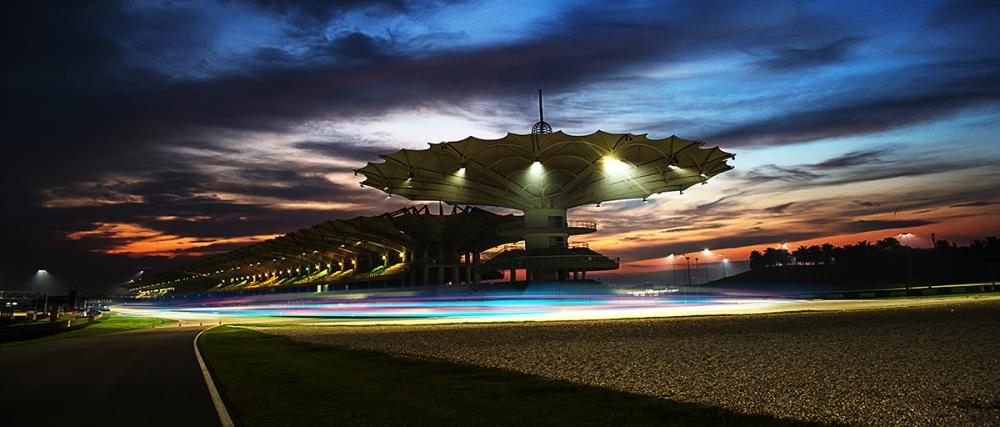
On 2 to 4 October the circuit hosts a Grand Prix that has another country's name on it, on a fee that country has already settled, for a preparation budget of about RM16 million.
The permanent version has been costed publicly at RM300 million a year, against a return estimated at RM1 billion. The October round is the last evidence gathered before that decision is taken.
The weekend will produce an attendance figure, a broadcast figure and an economic impact study. All three describe scale rather than standing, and none of them answers the two questions a finance ministry asks of a nine figure line, if the world still wants a race here, if that demand converts into a ticket. Both of those readings already exist, recorded before the gates open.
The world has not forgotten
The question is open, with no list, no options and no names offered. Which Grand Prix should come back to the calendar. Respondents type an answer in their own words and the spelling is normalised afterwards.
 Germany
 Malaysia
 South Korea
 South Africa
 France
 Portugal
 India
India Turkey
Malaysia comes second in the world nine years after leaving, ahead of South Korea, South Africa, France, Portugal, India and Turkey, with only Germany above it. The figure was produced outside Malaysia on an unprompted question, which is what gives it standing in a public funding discussion, and it shows that the 2017 exit removed the calendar slot without removing the position that came with it.
The data that decides RM300 million
Wanting a race back and buying a ticket for it are two separate acts. The distance between them is the commercial question underneath the case.
The same panel was asked, round by round across the 2026 calendar, if they plan to attend, would like to without a plan or have no interest. On the October round, 44.2% of everyone who declared something turned it into a plan. The rate is healthy on a pool that ranks twenty third of twenty four.
 Silverstone
 Austin
 Melbourne
 Spa
Spa SingaporeSepang, October
Silverstone holds four times the declared demand of this round and Melbourne more than three times, on the same panel and the same question. The world defends Malaysia in the abstract while very few people have planned the trip, which describes a marketing task with a date on it rather than a verdict on the market.
The same reading addresses the pricing position. Ticket prices for the October round are set on the Bahraini side, so the circuit has the visible result in the grandstands without the pricing lever. A conversion reading market by market is the instrument that remains available.
The audience is regional
Malaysia is 1.2% of our platform. Southeast Asia together is 8.3%, which is larger than Germany at 4.4 and close to double Australia at 4.9.
 Philippines
 IndonesiaMalaysiaSingapore
 Thailand
Every one of those markets is inside a short flight of Kuala Lumpur and every one of them has a competing weekend in the same quarter, with Singapore running one week later. A ticket plan built on the domestic crowd addresses 1.5% of the interested world, while a regional plan addresses eight.
Which audiences have the region in them
The reading below sets the platform average at 100. An audience at 200 is twice as Southeast Asian as the platform, an audience at 76 is a quarter less. The five markets that travel to this round are read together rather than one country at a time.
 Tsunoda
 Sainz
Sainz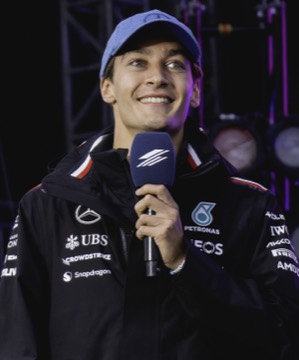 Russell
 Albon
Albon Bearman
 Williams
 Mercedes
 Red Bull
 Verstappen
 Ferrari
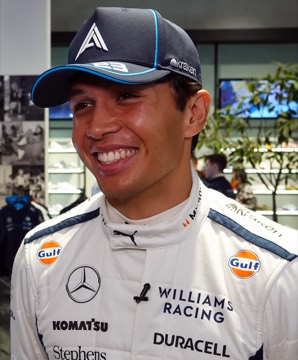
The names at the top are the regional ones. Tsunoda draws two and a half times the regional weight of the platform, Albon is Thai and holds the strongest Thai audience on the grid, and Bearman follows them. Among the teams, Williams and Mercedes lead, with Mercedes reaching 175 on the Malaysian reading alone.
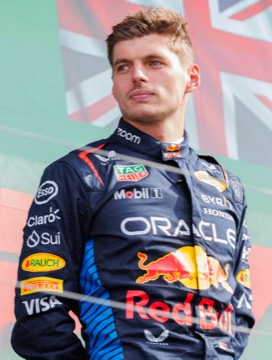
The two largest audiences on the grid have the least Malaysian weight, which changes what a launch campaign should buy. Reaching this market through the household names costs the most and returns the least, while Mercedes, Williams and the regional drivers reach an audience already present in the country at a lower price.
What the PETRONAS association is worth

The national energy company holds two assets that meet on this site. It has named the circuit since 2023 and it renewed its title and technical partnership with Mercedes from 2026 onwards, announced in Kuala Lumpur, taking that relationship towards two decades.
Our reading of the Malaysian audience puts Mercedes at 175 against a platform average of 100, the highest team weight in the country, with Russell at 208 and Hamilton at 192 above every other driver except the two regional names. The team that has the Malaysian brand on it is the team the Malaysian audience follows back.
The direction of that relationship has never been established. The national company may have built the following or may be buying an affinity the country already held. The difference decides what both agreements are worth at renewal. October is the only weekend of the year where the circuit name and the team name stand in the same place at the same time, in the month the naming term reaches its third year.
Measuring that relationship takes one question set on one weekend, asked of the people who recognise the name and asked where they place it, which is an answer neither contract currently produces.
One index to argue the slot
A commissioned study answers to the party that ordered it. An index published on a fixed method answers to everyone who reads it, which is the requirement when a calendar place is the thing being argued for.
- Open return questionunprompted, spelling normalised
- Standing against candidate marketswho else is asking for a slot
- Intent against declared planmarket by market
- Price ceiling by marketwhere the plan stops
- Five Southeast Asian marketsmeasured separately
- Audience weight by team and driverplatform average at 100
- Sponsor memory scoreof those who recognise, who can place
- Naming recallthe circuit name beyond the weekend
A ministry reads one line, a commercial team reads four and a partner conversation reads eight.
Five parties need the answer
Each of them asks a version of the same question and each of them relies today on figures produced by the circuit. A published number replaces five separate arguments with one reading held in common, which is the difference between defending a budget and presenting a position.
Method. Platform panel of 34,750 declared audience members. Return demand from an open text question with no options offered, spelling normalised. Attendance intent from 12,150 declarations across the twenty four rounds of the 2026 calendar. Geographic weight computed against the platform average, 100 equals the platform. Second sport from a single choice question. Every figure recalculated 7 August 2026.